Saturday, January 16, 2016

The Lab Mouse Story


The other day I happened to stumble onto a very interesting article that appeared in the Owensboro Messenger-Inquirer written by Chandra Emani, an Assistant Professor of Biology at Western Kentucky University-Owensboro. I thought the article was so interesting that I contacted Dr. Emani and a new friendship has developed.  As it turns out he also likes to write short articles about interesting and obscure tidbits of science.  Apart from teaching introductory and advanced courses in molecular biology and Genetics and researching on utilizing plants to make useful products such as biofuels and anti-cancerous pharmaceuticals, he enjoys explaining science in simple words to his daughter and son.   With his permission I am including here his Lab Mouse Story.  Dr. Emani has agreed to also contribute additional articles for this blog. It is our hope that he will bring our readers food for thought in the months and years ahead.  He may be reached at chandrakanth.emani@wku.edu
 *********************************************************************

The Lab Mouse Story
Chandra Emani

Ever since we were kids, whenever we visit or visualize a lab where medical or biological research is carried out, we always view a ubiquitous cute creature that the scientist experiments with, the white lab mouse. What is it with this animal that scientists always seem to test everything on and then have eureka moments in discovering new phenomena, new drugs that cure all ills? How does something tested in mice be good for humans? Let’s go back in time to see when it all started and then how these little creatures became the model research organisms for genetics, psychology and medicine.

In 1700s, the discoverer of blood circulation system William Harvey recorded the first experiments with mice to study both the processes of blood circulation and reproduction to translate the findings for use in human medicine simply because they were animals that were easy to breed and had an ideal generation time (as in going from parents to offspring) as laboratory animals. The discoverer of the microscope Robert Hooke also working in that same period used them to investigate what happens to life forms under conditions of increased air pressure in enclosed spaces. Joseph Priestley who first made oxygen in the lab tested his lab made life saving gas on lab mice.

Another remarkable scientific event that was cut short in the 1800s involved lab mice. In 1850s, the Austrian Monk Gregor Mendel wanted to study how genes transmitted from to parents to their next generation using lab mice. But in the Church where he had his small lab, his supervisor cut short his experiments to “stop the work with the smelly creatures.” Mendel then had to choose another experimental model, the pea plant and his work, though revolutionary, was published in an obscure journal that had to wait 35 years to be rediscovered (research with plants was not as recognized as animal research) and that set back the revolution known as Genetics. It was only in 1902 that the French biologist Lucien Cuenot replicated Mendel’s laws of genetics using lab mice.

But the real revolution of establishing the lab mouse as an ideal experimental model in 1900 in a farm at Granby, Massachusetts where an elementary schoolteacher named Abbie Lathrop from Illinois started a poultry business. The poultry business failed and Abbie started breeding mice for hobbyists and pet owners. The other animals she raise were ferrets, rabbits and guinea pigs (another popular lab animal of choice). She was assisted by her close friends Edith Chapman and Ada Gray. Abbie started with a pair of waltzing mice she got from her farm and soon successfully multiplied the litter to 11,000. It was at this point that some scientific researchers started looking at her unique and meticulous process of breeding and maintenance of mice in wooden boxes with straw mats fed on oats and crackers and soon the word spread. Abbie started selling mice to scientific labs. At one point, she recorded using one and a half tons of oats and over a dozen barrels of crackers in a month and paying pocket money of a pristine 7 cents an hour to local children to clean the cages of the mice. After her mice made way to the Harvard University, the United States government purchased her mice and guinea pigs to test toxic gases in the trenches of the First World War. The adage of “being used as a guinea pigs” came from.

In 1908, Abbie saw that some of her mice started developing some unusual skin lesions or scars. She wrote a letter to the famous experimental pathologist Leo Loeb at the Washington University and he identified them as cancerous tumors remarkably similar in properties to breast cancer tumors in humans. Loeb encouraged Abbie to develop inbred strains of these mice and between 1913 to 1919, the unlikely pair of a farm woman and a scientist authored 10 journal articles, some of them in Journal of Cancer Research and Journal of Experimental Medicine where they found the biological basis of cancer using a lab mouse model, and the rest as they say is history. During this time, a Harvard geneticist William Castle purchased some of Abbie’s mice and an undergraduate working in his lab by the name Clarence Cook Little (who later became famous for establishing the role of tobacco in causing cancer) was instrumental in developing the mouse strain called “Black 6” which is the frequently used lab mouse till date. Though Little patronizingly referred to Abbie as a “talented pet-shop owner”, it is a known fact now that the famous DBA (Dilute, Brown and non-Agouti) inbred mouse strain that is widely used in medical research came from a silver fawn mouse developed by Abbie. Abbie died as an unsung heroine in 1918 due to pernicious anemia, but her notebooks, observations and meticulous breeding records kept at the famous biomedical research institute, the Jackson Laboratory in California revealed that at least five strains of lab mice that are used today in labs around the world heralding many revolutionary studies came from a single female mouse that she bred in her farm.

As modern medical marvels and possibly a cure for the dreaded disease cancer would one day see the light only after clinical trials translate from countless “mouse model experiments”, let’s salute the unsung heroine behind it all, Abbie Lathrop, a home schooled elementary school teacher who worked from a modest farm in Granby, Massachusetts and heralded the greatest scientific revolutions in medical science.

Sunday, October 11, 2015

Joseph Priestley is on the Move Again

Bronze Sculpture of Joseph Priestley, Leeds, England. Walter Harding, sculptor, 1903

In an article in the Birmingham Mail it has been reported that the bronze statue of Joseph Priestley in Chamberlain Square is on the move.  The statue has been removed from its plinth and transported into storage at the Birmingham Museums Trust Collection Centre ahead of the demolition of the Central Library and the start of reconstruction of the area around the Square.  The statue of James Watt was also removed and the statue of Thomas Atwood will also be removed in a similar manner.
They will all be returned to the Square when the construction work is completed.

Both Watt and Priestley resided in Birmingham during the early days of of the Industrial Revolution and were members of the Lunar Society.  Priestley, a clergyman, scientist, educator, and social activist is best known for his discovery of Oxygen.  James Watt and Matthew Boulton are credited with the development of the steam engine.

The Joseph Priestley Statue was originally located in Victoria Square, then called Council House Square, but was later move to Chamberlain Square and recast in bronze due to irreparable weather erosion to the original marble.

Watt on the move

Capturing Images of the Elderly in the Early Days of Photography and Motion Pictures

George Washington was born in 1732.  When he died in December of 1799, there were no photographic images of him ever taken because the technology of the photographic process had not been discovered yet.  If you want to "see" what George Washington really looked like, you are limited to viewing interpretive paintings, drawings and engravings of him.  Perhaps that is why different pictures of him look like they are not of the same person.

Recently, I was rummaging around and found some old 16mm home movies that my father took in the 1930s.  It had some great shots of his father-in-law.  I was excited to retrieve this footage of my maternal grandfather and I'm going to have it digitized so that I can preserve it and pass it on to my grandson. After all, this is footage of his great-great-grandfather and it ties in well with the genesis of the search for information on my grandparents and other ancestors which I have been collecting since I posted a piece called Touchstones of Time on this blog.

Unless you just happened to have read that post and remembered a lot of the details, I wouldn't expect you to remember that my maternal grandfather was actually born in 1862.  So, in short, I have a motion picture of a person who was born in 1862.

The question I posed to myself is what is the earliest birthdate of a living person (i.e., living at the time of the shooting of the images) whose image is captured on film?  And, of course, the related question, what is the earliest birthdate of a living person who is captured in a photograph?

I have no doubt that there are motion pictures that exist that are of individuals far older than my grandfather.  As a candidate for the earliest birthdate of an individual captured in a photographic image I immediately thought of an image I have seen of Dolley Madison taken on


Dolley Madison, July 4, 1848, age 80
July 4, 1848, who was 80 years old at the time.  She was born on May 20, 1768, almost 250 years ago.  Dolley Madison, of course, was the wife of the fourth President of the United States, James Madison.
Dolley Madison, 1848 daguerreotype by Mathew Brady
A slightly older John Quincy Adams, born on July 11, 1767, was the sixth President of the United States and was captured in the photograph below.
John Quincy Adams, 1843
Here is another photograph of John Quincy Adams:


And, a still older individual, Samuel Wilson, who was born September 13, 1766, was a resident of Troy, New York, and is recognized as the origin of the term "Uncle Sam". The picture below was taken in 1843.  He was 77 years old when the picture was taken.

Uncle Sam Wilson, 1843
Even older yet is a daguerreotype of John Armstrong, Jr. (November 25, 1758 – April 1, 1843)  who was an American soldier and statesman who was a delegate to the Continental Congress, U.S. Senator from New York, and Secretary of War under James Madison.
John Armstrong, Jr. with dog, 1840
This means that Armstrong was about 82 years old when this picture was taken and this was within the first year of the availability of the daguerreotype process.  Daguerreotypy developed by the French painter Louis-Jacques-Mande Daguerre, was the first publicly announced photographic process ever developed, in 1839. However, the oldest image using this process by Daguerre himself was taken two years earlier, in 1837.

 L’Atelier de l'artiste, first photographic image by Daguerre
The longest unambiguously documented human lifespan is that of Jeanne Calment of France (1875–1997), who lived to the age of 122 years, 164 days. The picture below was taken in 1996 on the occasion of her 121st birthday:
Jeanne Calment, at 121st birthday in 1996
Jean Calment met Vincent Van Gogh when she was 11 or 12 years old.

The oldest extant American Daguerreotype portrait was a self-portrait taken by Robert Cornelius in October or November 1839. The announcement of the process occurred in August, 1939, a few months prior.  See below:


Robert Cornelius, Self-Portrait, 1839
Unfortunately, Cornelius was born in 1809, so he does not even come close to claiming fame for the oldest person depicted in a photograph.
On a purely speculative basis I am presuming that the oldest person in a photographic image was shot shortly after the technology was developed in 1839 and that person would have been in their late 80s.
That would put their birthdate somewhere around the beginning of the 1750s.  To put this in perspective, it would have to have been a person born about a decade after George Washington.

The French physiologist Etienne-Jules Marey took the first series of photographs with a single instrument in 1882 with a camera shaped like a rifle that recorded 12 successive photographs per second.   However, the world's oldest photographic moving picture sequence is by the French photographer Felix Nadar who created his revolving portrait in 1865.  Thomas Edison is credited with having taken the first true motion picture in 1889, but the image's quality is so poor that the identity of the individual who was the subject in the movie is not discernable.

Again, on a purely speculative basis I am presuming that the oldest person in a motion picture sequence was shot in the early 1890s and that the person could have been in their late 80s.  That would put their birthdate somewhere just after the beginning of the 19th century; probably someone around Abraham Lincoln's date of birth. 


Here is a Youtube sequence of old motion picture cuts from New York City, the oldest being from 1896. If any readers would like to nominate a picture or motion picture that would be a candidate for the oldest person in each category we would like to hear from you.


last modified 1/9/2016


Tuesday, September 15, 2015

Is a Hyperloop Pneumatic Tube for the Transport of People and Goods Really Possible?


In 1897 the United States Post Office started to install pneumatic tubes in a 
number of metropolitan areas in order to expedite the delivery of the mail. 
By 1898 the tubes were in operation.   

Robin Pogrebin, in an article in the New York Times on May 7, 2001, wrote a
fascinating piece on the history of the pneumatic tube mail system.  In the article 
he highlighted some of the features of the system.  The system was thoroughly 
modern, some might even say high-tech.  It was like subterranean internet for 
priority and first-class mail powered by air pressure. Pneumatic tubes similar to 
these are still used in some banks, and other specialty areas.  I even saw some at
Home Depot not too long ago.

The mail tubes were installed in the cities of Boston, Philadelphia, Chicago, St. 
Louis, and New York.  In Manhattan, they extended about 27 miles, from the old 
Custom House in Battery Park to Harlem and back through Times Square, Grand 
Central Terminal and the main post office near Pennsylvania Station. In the 
picture above at the at the City Hall station, the mail also went in a pneumatic tube 
over the Brooklyn Bridge to the general post office in Brooklyn. 

The system used pressurized air to move a mail canister through an underground 
eight-inch cast-iron pipe.  In New York City, two pipes were used along each 
route, one for sending, the other for receiving.  The pipes were buried 4 to 12 feet 
underground, though in some places the tubes were placed within subway tunnels.  
Improvements in the speed of the motor-wagon and its successor, the automobile, 
signaled the end of the pneumatic tube.  However, the tube system remained in 
operation in New York City until December 1, 1953.


Artist's impression of a Hyperloop capsule: Air Compressor on the front, passenger compartment in the middle,
battery compartment at the back and 
air bearing skis at the bottom.


The modern day equivalent to the pneumatic air tube of the postal service 
of the late 19th century might arguably be the hyperloop (see the
illustration above), a conceptual high-speed transportation system proposed 
by Elon Musk in 2013 as a means of efficiently transporting people and 
goods quickly over large distances.  The Hyperloop would incorporate 
reduced pressure tubes in which pressurized capsules would ride on an air 
cushion driven by linear induction motors and air compressors.

While the hyperloop has been roundly criticized as a "pipe dream."  

Some elements in the Musk conception of the technology to realize the 
hyperloop would utilize newer technological components such as a linear 
induction motor, history shows us that the general concept is far from new, 
and far from impractical.  

Saturday, August 29, 2015

Of the Invention of Telescopes and Microscopes, with their First Improvements

Screen Shot 2015-08-08 at 11.10.58 AM.png


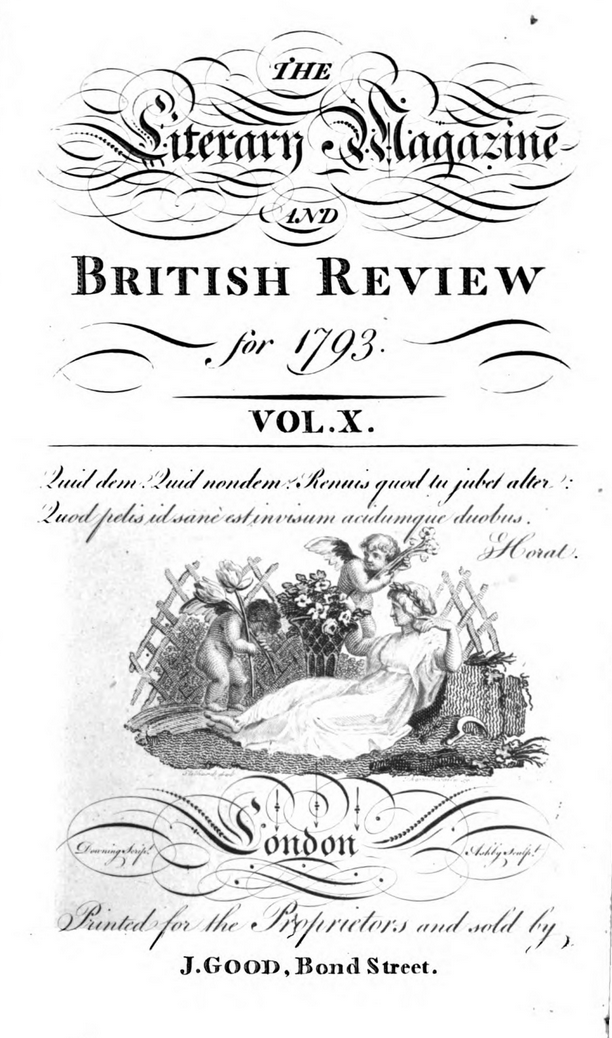
I happened to run across an article by Joseph Priestley  [Priestley, Joseph, LL.D, F.R.S., Of the Invention of Telescopes and Microscopes, with their First Improvements,The Literary and Biographical Magazine and British Review, vol.10 (June,1793): pp. 407-11.].

What I found so interesting with this article was that I could not find it listed in any of the standard bibliographies of his works; not even in the on-line Wikipedia bibliography on Joseph Priestley, which, importantly, is the most up to date (I have subsequently corrected that situation), nor in Robert Schofield book which is considered the authoritative biography on Priestley with an excellent bibliography.  It seems rather odd that a person with such a distinguished career and elaborate corpus of works as Priestley would have a publication missing from his bibliography for more than 210 years after his death, and 221 years after he wrote the article.  

I note, however, that while there was a section on the very subject of the article with the exact same title I found in his book: The History and Present State of Discoveries Relating to Vision, Light, and Colours, London: Printed for J. Johnson, 1772,pp.55-81, there is enough of a difference between the two works that this work should have been recorded as part of his bibliographical legacy. Further, it should be noted that there is a full 21 years difference between the publication dates of the book and the journal article. Finally, it is worth noting that it doesn't make any sense to have excluded it, based solely upon the fact that it appeared in such a prominent British publication with his authorship clearly identified.

One final note about the article, versus its content, is that while the title as stated above is what appears at the head of the magazine article, all subsequent pages of the article carry the banner "On the Invention of Telescopes and Microscopes" [emphasis added].

"The More Elaborate our Means of Communication, the Less we Communicate" J. Priestley


I have often seen the quote offered in the title of this post attributed to Joseph Priestley (1733-1804), the famous 18th-century British-American polymath who was the first to report the isolation of the gas Oxygen.  It has never sat right with me.  I have studied much about Joseph Priestley's life and it just didn't seem like there was much in the way of "elaborating" communication that had transpired before or during his lifetime other than the invention of movable type and the printing press in the 15th century.  I had often thought that a more probable candidate for the quote was J(ohn). B(oynton). Priestley (1894-1994), the famous 20th century British novelist and broadcaster.  He was certainly alive during a period of rapid change in communications technology; as a broadcaster was most certainly aware of communications skills; and, as a novelist he could certainly elaborate upon all this.

I have found two quotations, one is the title of this post and the other, almost identical, which, at first blush, looks identical, “The more elaborate our means of communication, the less we communicate”.  The second quote has an additional "we" as the third word.   Of the numerous sources I have found they attribute each of these quotations to either J. B. Priestley or Joseph Priestley (by the way, most are attributed to Joseph Priestley).  Interestingly, though, the quoters are not unanimous on which is attributable to each person. Not one quoter has actually cited the primary source (by primary source, I mean the actual publication by the respective author). I have found it hard to believe that these two people with almost identical names, each uttered almost identical quotes. I also find it hard to believe that I could not find the actual source of the quotation. 

I am proud to announce that, after a considerable search, I have now found the proper attribution and wording for the quote: “The more we elaborate our means of communication, the less we communicate.”  See Baden Eunson, Communicating in the 21st Century, in reference to Priestley’s Paradox.  The source reference for the quote is J.B. Priestley, Thoughts in the Wilderness,   Heinemann, 1957, p. 201. 


And, of course, the photo above is that of the author of the quote, J. B. Priestley.  May he rest in peace.


Thursday, August 13, 2015

Joseph Priestley on Public Television

Wed, Aug 19 at 8 pm, PBS
(Check your local PBS station for broadcast times)

            
Patrick Page as Joseph Priestley                      Patrick Page, Ava Deluca-Verley and Hugo Becker
 as Joseph Priestley, Marie Anne and Antoine Lavoisier

The Mystery of Matter: Search for the Elements is an exciting PBS series about one of the great adventures in the history of science: the long (and continuing) quest to understand what the world is made of—to identify, understand and organize the basic building blocks of matter.

Three hour-long episodes introduce viewers to some of history’s most extraordinary scientists: Joseph Priestley and Antoine Lavoisier, whose discovery of oxygen—and radical interpretation of it—led to the modern science of chemistry; Humphry Davy, who made electricity a powerful new tool in the search for elements; Dmitri Mendeleev, whose Periodic Table brought order to the growing gaggle of elements; Marie Curie, whose groundbreaking research on radioactivity cracked open a window into the atom; Harry Moseley, whose discovery of atomic number redefined the Periodic Table; and Glenn Seaborg, whose discovery of plutonium opened up a whole new realm of elements, still being explored today.

The Mystery of Matter shows us not only what these scientific explorers discovered but also how, using Broadway-caliber actors to reveal the creative process through the scientists’ own words, and conveying their landmark discoveries through re-enactments shot with working replicas of their original lab equipment. Knitting these strands together into a coherent, entertaining whole is host Michael Emerson, a two-time Emmy Award-winning actor.

Mystery of Matter:  Search for the Elements will be shown on PBS on Wednesday, August 19, 2015 from 8PM to 11PM. (3-1 hour shows airing back to back)