Showing posts with label Joseph Priestley. Show all posts

Friday, March 13, 2026

Celebrating Joseph Priestley's Birthday - March 24, 1733

This coming March 24th, we will celebrate the 293rd year since the birth of this magnificent person, known by the name of Joseph Priestley, who has contributed so much to our civilization.  He was born to a family of rather ordinary means in Birstall, West Yorkshire, England, in 1733.

Actually, at the time he was born, the Julian calendar was in use in England, and he was born on March 13, 1732. But when England switched to the Gregorian calendar and also started of the new year to January 1st, his birth date was changed to reflect the date we celebrate now.

He would go on to make significant contributions in many diverse fields.  He is viewed by some today as the conscience of our modern way of thinking.  We have extolled his many contributions to humanity in the pages of this blog; should you wish to learn more about him, feel free to browse the many entries about him that we have posted. 

Yet, today, for most, he is a relatively unknown figure of history, or perhaps, only known as the person who first isolated the gas we now know as oxygen.

Sunday, January 11, 2026

February 11, 2026 Marks the 222th Anniversary of the Death of Joseph Priestley in Northumberland PA


We last visited the graveside of Joseph Priestley in Northumberland, PA, on February 6, 2004, almost 22 years ago on the commemoration of the 200 years since his death. Priestley is as relevant, if not more so, today than when he died there over two centuries ago, shortly after the birth of our nation.

History Today said, "President Thomas Jefferson of the United States wrote to Joseph Priestley, clergyman and chemist, when the latter was seriously ill in 1801, ‘Yours is one of the few lives precious to mankind, for the continuance of which every thinking man is solicitous.’ Not everyone in America or Britain would have agreed with this sentiment. On the contrary, Priestley’s radical views on religion and politics had made England too hot for him. A mob in Birmingham had destroyed his home, his books, and his laboratory with all his apparatus ten years before and he had felt in danger ever afterwards. In 1794, he and his wife, Mary, emigrated to America, where their three sons had already preceded them. After a horrible seasick voyage of eight weeks against contrary winds, they arrived in thick fog in New York City to great acclaim and went on to Philadelphia, where Priestley was again received with flattering attentions."

On the morning of February 6, 1804, at his home in Northumberland, PA, after dictating final revisions to a manuscript which was a memoir of his life, he famously declared, "That is right. I have now done," and passed shortly after, a death marked by his son and family present. He was buried near his home, and his death followed the years of political turmoil in England that led him to emigrate to America. 

If you are interested in seeing the post on our visit to his resting place, click here.

Friday, July 25, 2025

The Life and Timescapes of Joseph Priestley

Reprinted from Humanities: The Magazine of the National Endowment for the Humanities, with permission. Joseph Priestley Created Revolutionary “Maps” of Time. Then he became the most controversial man in England Alyson Foster HUMANITIES, Spring 2024, Volume 45, Number 2 HUMANITIES: The Magazine of the National Endowment for the Humanities Although Priestley is best remembered for the discovery of the gas we now call oxygen, he published on an astonishingly wide array of subjects, including education, English grammar, theology, and political theory.  It’s a testament to the wide-ranging and unconventional nature of Joseph Priestley’s mind that no one has settled on a term to sum up exactly what he was. The eighteenth-century British polymath has been described as, among other things, a historian, a chemist, an educator, a philosopher, a theologian, and a political radical who became, for a period of time, the most despised person in England. 

Priestley’s many contradictions—as a rationalist Unitarian millenarian, as a mild-mannered controversialist, as a thinker who was both ahead of his time and behind it—have provided endless fodder for the historians who have debated the precise nature of his legacy and his place among his fellow Enlightenment intellectuals. But his contributions—however they are categorized—have continued to live on in subtle and surprisingly enduring ways, more than two hundred years after his death, at the age of seventy, in rural Pennsylvania. 

Take, for example, A Chart of Biography, which is considered to be the first modern timeline. This unusual, and unusually beautiful, pedagogical tool, which was published by Priestley in 1765, while he was in his thirties and working as a tutor at an academy in Warrington, England, tends to get lost in the shuffle of Priestley’s morenotable achievements—his seminal 1761 textbook on language, The Rudiments of English Grammar, say, or his discovery of nine gases, including oxygen, 13 years later. But the chart, along with its companion, A New Chart of History, which Priestley published four years later, has become a curious subject of interest among data visualization aficionados who have analyzed its revolutionary design in academic papers and added it to Internet lists of notable infographics. Recently, both charts have become the focus of an NEH-supported digital humanities project, Chronographics: The Time Charts of Joseph Priestley, produced by scholars at the University of Oregon. 

Even those of us ignorant of (or uninterested in) infographics can look at the painstakingly detailed Chart of Biography for a moment or two and appreciate how it has become a source of fascination. The two-foot-by-three-foot, pastel-striped paper scroll—which contains the meticulously inscribed names of approximately 2,000 poets, artists, statesmen, and other famous historical figures dating back three millennia—is visually striking, combining a formal, somewhat ornate eighteenth-century aesthetic with the precise organization of a schematic. Every single one of the chart’s subjects is grouped vertically into one of six occupational categories, then plotted out chronologically along a horizontal line divided into ten-year increments. Despite the huge quantity of information it contains, it is extremely user-friendly.

Anyone of Priestley’s history students could run his eye across the chart and immediately gain a sense of the temporal lay of the land. Who came first: Copernicus or Newton? How many centuries separate Genghis Khan from Joan of Arc? Which artists were working during the reign of Henry VIII? The chart was a masterful blend of form and function, and Priestley knew it. “Please now to inspect the Chart, and as soon as you have found the names, you see at one glance, without the help of Arithmetic, or even of words, and in the most clear and perfect manner possible, the relation of these lives to one another in any period of the whole course of them,” he boasted. “To a revolutionary generation intent on inscribing itself in history,” the historians Daniel Rosenberg and Anthony Grafton wrote, “the Priestley chart seems to have had an almost talismanic appeal” Library Company of Philadelphia / University of Oregon.  

The most significant design feature of Priestley’s chart—as historians point out—was the way in which he linked units of time to units of distance on the page, similar to the way a cartographer uses scale when creating a map. (The artist Pietro Lorenzetti lived two hundred years before Titian and thus is situated twice as far from Titian as Jan van Eyck, who predated Titian by about a century.) If this innovation is hard for contemporary viewers to fully appreciate, it’s probably because Priestley’s representation of time has become a convention that’s used everywhere in visual design and seems so obvious it’s now taken for granted. To Priestley’s contemporaries, though, who were accustomed to cumbersome Eusebian-style chronological tables or the visually striking but often obscure “stream charts” created by the era’s chronographers, Priestley’s method of capturing time on the page revealed something revelatory and new—a way of seeing historical patterns and connections that would have otherwise remained hidden. 

“To many readers,” wrote Daniel Rosenberg and Anthony Grafton in their book, Cartographies of Time, Priestley’s Chart of Biography offered a never-before-seen “picture of time itself.” ​​​​​​Priestley wrote that individuals included in his Chart of Biography were selected according to “renown and not merit; acquired fame, and not deserved reputation.” —Detail from Joseph Priestley’s 1765 A Chart of Biography, Library Company of Philadelphia / University of Oregon.  It was no wonder, then, that eighteenth-century readers found themselves drawn to it. A Chart of Biography sold well in both England and the United States, accruing many fans along the way. Along with the New Chart of History, it would go on to be printed in at least 19 editions and spawn numerous imitations, including one by Priestley’s future friend Thomas Jefferson, who developed his own “time chart” of market seasons in Washington, and the historian David Ramsay, who acknowledged Priestley’s influence in his Historical and Biographical Chart of the United States. 

The time charts marked Priestley’s first major commercial success and played a key role in establishing his reputation as a serious intellectual, earning him an honorary degree from the University of Edinburgh, and helping him secure a fellowship nomination to the Royal Society of London. As much as anything he published, and he published a staggering amount—somewhere between 150 and 200 books, articles, papers, and pamphlets—Priestley’s time charts encapsulate his uniqueness as a thinker. Of his many intellectual gifts, his gift for synthesis—for knitting together the seemingly disparate things that caught his attention—might have been his greatest. 

On any given subject, his biographer Robert Schofield observed, Priestley had “contemporaries who were more profound and analytic,” but he “made systematic and operational what had been fragmentary, frequently impractical, and unused before him.” The charts, which he energetically promoted, also serve as a perfect example of the man’s seemingly compulsive need to share the knowledge he acquired with others. “The proper employment of men of letters,” he once wrote, “is either making new discoveries, in order to extend the bounds of human knowledge; or facilitating the communication of the discoveries which have been made already, in order to make an acquaintance with science more general among mankind.” 

In this regard, he wholeheartedly practiced what he preached. After Benjamin Franklin’s 1751 book on electricity piqued his interest in the subject, Priestley finagled an introduction to the book’s famous author, then proceeded to research and publish his own 700-page tome on the subject—a “history of the discoveries in electricity,” complete with his own experiments for interested readers. 

When the book’s plates required an illustrator, and he was unable to find a satisfactory one, he taught himself perspective drawing, then published a 1770 tutorial for aspiring artists titled A Familiar Introduction to the Theory and Practice of Perspective. (Fun fact: Priestley is often credited with discovering the erasing properties of rubber, as well as with naming the substance, which was perfectly suited for “rubbing” away errant pencil marks.) A bit of dabbling in the subject of optics followed, along with a history of the field, published in 1772. 

That same year, after explaining to friends over dinner one night how he could “sweeten” water by using a pig’s bladder to infuse it with carbon dioxide, he produced the 34-page illustrated pamphlet “Directions for Impregnating Water with Fixed Air.” “To make this process more generally known,” he wrote in its preface, “and that more frequent trials may be made of water thus medicated, at land as well as at sea, I have been induced to make the present publication.” Priestley’s “Pyrmont water”—or what’s commonly known today as carbonated water—was an instant hit in England and France and contributed to his receiving the Copley Medal of the Royal Society in 1773. 

Bolstered by the mistaken belief that the water contained antiscorbutic properties, Britain’s Royal College of Physicians instructed Captain James Cook to test out the carbonation process on his upcoming second sea voyage. Regardless of whether Cook actually carried out the experiment—sources conflict on this point—it was doomed to failure. Priestley’s fizzy Pyrmont water had no more vitamin C in it than uncarbonated flat water, and so it was equally useless when it came to preventing scurvy. But it was an unconventional, and thus fitting, way to mark Priestley’s foray into yet another scientific discipline.

Schofield noted wryly: “This is the work for which Priestley became known to the world as a chemist; a description of how to make ‘soda water,’ wrongly assumed to have medicinal value.” Priestley turns up in another intriguing footnote related to Cook’s famous 1772 voyage—which is that he was, briefly, offered the opportunity to join the expedition as one of the ship’s astronomers. The invitation, which was extended to Priestley in a letter from the legendary botanist Joseph Banks, is the kind of tantalizing “what if” that counterfactual history is made from. Who knows what other subjects Priestley would have set his sights on if he’d had the opportunity to travel the globe? 

Electricity was just one of many natural phenomena that fascinated Priestley. This electrical machine he designed “for amateur experimentalists,” appeared in a 1768 book written to educate the public about the subject.  A few weeks after receiving Banks’s invitation, the offer was rescinded. The reason was never fully made clear, but Priestley had a theory. “Mr. Banks,” he would write in a memoir that was published two years after his death, “informed me that I had been objected to by some clergymen . . . on account of my religious principles.” This may or may not have actually been the case. (Schofield contends that Banks jumped the gun, inviting Priestley to join the expedition without being authorized to do so.) But Priestley’s assumption was an understandable one. 

He was a nonconformist minister and a member of England’s Protestant Dissenter minority, one that opposed state involvement in religious issues, refused to subscribe to the Anglican church’s doctrine, and, as result, faced discrimination. (Dissenters like Priestley were, for instance, prohibited from matriculating at the University of Oxford or Cambridge until the nineteenth century.) And Priestley’s heterodox religious views were a matter of public record. He was, by that point, a seasoned veteran of the era’s pamphlet wars, having embroiled himself in controversy with his 1768 A Free Address to Protestant Dissenters on the Subject of the Lord’s Supper before going on, two years later, to attack major aspects of Calvinist doctrine in An Appeal to the Serious and Candid Professors of Christianity. 

Over the next two decades, his notoriety would only grow as he published a series of “brilliantly controversial works,” wrote the historian David Wykes, which “advanc[ed] ideas that caught up and convinced many of his readers and a generation of young ministers” but which also unleashed “a storm of anger.” Orthodox readers were not particularly keen to hear Priestley analyze the logical flaws he had discovered in the doctrine of atonement or to hear him out as he explained the ways in which their beliefs regarding the Holy Trinity were “inconsistent with reason and common sense.” 

In 1785, three years after it was published, his book An History of the Corruptions of Christianity was banned in Holland. Far from silencing him, the barrage of angry responses goaded Priestley into picking up his pen and producing more pamphlets filled with more arguments. “He entered each controversy with a cheerful conviction that he was right, while most of his opponents were convinced, from the outset, that he was willfully and maliciously wrong,” Schofield wrote. “He was able, then, to contrast his sweet reasonableness to their personal rancor while responding, in kind to irony and sarcasm.” 

Priestley’s religious provocations, combined with a potent mix of unpopular political views—his support for the American and French revolutions, his criticism of the slave trade, his commitment to religious liberty for Dissenters, his agitation for parliamentary reform—only served to cement his reputation, first as a radical, and then as a dangerous menace. By 1790, his enemies had come to see the soft-spoken minister as “the devil incarnate,” wrote Wykes. It was a comparison that Priestley, perhaps unwisely, did not shy away from. 

“If he really took me to be that malicious Being, above described,” he wrote gleefully of one of his foes, “he should not have trodden upon my cloven foot, or have kicked me so near my tail, without remembering that I had horns, and he had none.” Had he known what was coming, he might not have found it so amusing. One evening in the following July, Priestley received a warning that a large number of protestors had attacked a group of diners attending a Bastille Day celebration at the Birmingham Hotel. From there, the mob—which had grown significantly larger—moved on to destroy the Unitarian meeting house where Priestley presided as minister, ripping out the pews and setting them on fire. And, it seemed, they were now on their way to the Priestley residence. There was no time for Priestley and his wife to do anything but flee, and then watch as a crowd converged on their house and proceeded, with some difficulty, to burn it to the ground. “It being a remarkably calm, and clear moon-light,” Priestley recalled later: We could see to a considerable distance, and being upon a rising ground, we distinctly heard all that passed at the house, every shout of the mob, and almost every stroke of the instruments they had provided for breaking the doors and the furniture. 

For they could not get any fire, though one of them was heard to offer two guineas for a lighted candle; my son, whom we had left behind us, having taken the precaution to put out all the fires in the house, and others of my friends got all the neighbours to do the same. I afterwards heard that much pains were taken, but without effect, to get fire from my large electrical machine, which stood in the library. 

The attack on Priestley was personal—but it also wasn’t. Over the next several days, widespread terror and looting would engulf Birmingham as rioters clashed with local constables, targeting and destroying some two dozen homes, businesses, and churches belonging to prominent Dissenters and supporters of the French Revolution before authorities finally called in military dragoons to restore order. In the end, the violent events of July 1791 would come to be known as the Priestley riots, after their most high-profile victim, and the man who symbolized everything his “Church and King” enemies despised. 

On one of Priestley’s sweeping timelines, a few days of riots would not merit even a speck of ink. As a historian, Priestley was well aware of this fact. More than two decades earlier, long before his home and nearly all his worldly possessions were destroyed, he had studied the rise and fall of empires, mapped out across his New Chart of History, and attempted to counsel his readers about the lessons he had found there. “What a number of revolutions are marked upon it!” he wrote: What torrents of human blood has the restless ambition of mortals shed, and in what complicated distress has the discontent of powerful individuals involved a great part of their species! Let us deplore this depravity of human passions . . . but let not the dark strokes which disfigure the fair face of an historical chart affect our faith in the great and comfortable doctrine of an over-ruling Providence. 

In the weeks and months following the riots, this sense of perspective would be put to the test. The mob had destroyed not only Priestley’s home, his valuable collection of manuscripts, and his beloved, expensive lab equipment (worth around $115,000 in today’s dollars), but also whatever illusions he might once have harbored about his own safety. Far from cooling the depraved human passions against him, the historian Wykes wrote, the events in Birmingham had turned him into “a national figure of hate.” 

Priestley invited controversy with his unconventional political and religious views, including his support for the French Revolution. Targeted by a mob in Birmingham and pilloried in the press, he was forced to flee England in the summer of 1794.  Priestley was satirized in caricatures, burned in effigies with his fellow radical, Thomas Paine. His adult sons were forced to flee the country. The prosecutions of fellow Dissenters that followed over the next few years were particularly frightening. “It shews that no man who is obnoxious,” he fretted in a 1793 letter, “however innocent, is safe.” 

And so, the following spring, at the age of sixty-one, he became a political refugee, following his sons Joseph and Harry across the Atlantic, where he was met with a hero’s welcome in the United States, eventually settling down with his family in the small town of Northumberland, one hundred forty miles northwest of Philadelphia, to assume the quiet life of a farmer. But farming didn’t suit Priestley, and neither did quiet. Over the next several years, Priestley found himself back in political hot water, clashing this time with his friend John Adams and the Federalists, in danger, at one point, of being deported from the very country that had just offered him asylum. (Adams blamed Priestley’s Letters to the Inhabitants of Northumberland for contributing to his 1800 electoral defeat to Jefferson.) 

In his adopted homeland, Priestley returned to his scientific work with renewed zeal, but that, too, proved to be controversial, as he produced paper after paper attacking the experiments of his fellow chemists, who had moved on from Priestley’s outdated theory of “dephlogisticated air” to follow the more quantitative approach of scientists like Antoine Lavoisier. In doing so, Schofield observed, Priestley was “perversely fighting the new chemistry based on his discoveries” in a way that would come to exasperate even his admirers. 

In a eulogy written for the Académie Nationale des Sciences, the zoologist Georges Cuvier would famously proclaim Priestley to be “the father of modern chemistry [who] never acknowledged his daughter.” The century-old theory Priestley relied upon during his pneumatic experiments—which postulated that all flammable substances contained an element called phlogiston that was released into the surrounding air during combustion—proved to be wrong in the end. 

But the work he conducted in the final decade of his life was not a wasted effort, says Schofield. By relentlessly hounding his critics, by probing for the weak spots in their arguments, he had “forced the tightening of their experimental evidence,” and compelled them to up their scientific game. Surely that fact would have offered him some satisfaction. He understood that the pursuit of knowledge was not a solitary one. Even the most famous individuals, the ones whose accomplishments fill the pages of books, the ones whose names adorn charts of history, he once wrote, “enjoy . . . the labours and discoveries of others” before they “go off the stage,” leaving their work behind, to be advanced by those who follow them. 

Priestley labored as long as possible, through deteriorating health and advancing old age, continuing to conduct experiments until he was unable to leave his bed. On February 6, 1804, he called his assistant to his side with one final request for help on revisions to an unfinished manuscript that required his attention. He worked until he had assured himself that he had finished what was needed. “That is right,” he said. “I have now done.” Minutes later, he was gone. 

About the author, Alyson Foster is an associate editor of Humanities magazine. Funding information In 2020, NEH awarded a Digital Humanities grant in the amount of $99,985, to Daniel Blake Rosenberg of the University of Oregon and Anthony Grafton of Princeton University to develop The Time Charts of Joseph Priestley, a digital, interactive reconstruction of Joseph Priestley’s influential infographics, A Chart of Biography and A New Chart of History. In 1994, a Public Programs grant ($45,166) supported the planning of an interpretation of the laboratory, library, and landscape at Joseph Priestley’s former home in Northumberland, Pennsylvania. 

NEH grants have funded numerous projects on the work and influence of major Enlightenment thinkers, including Voltaire, Jean-Jacques Rousseau, Benjamin Franklin, Adam Smith, John Stuart Mill, and Immanuel Kant, as well as lesser-known figures such as the abolitionist Jean-Jacques Dessalines and the Italian Jesuit priest Francesco Emanuele Cangiamila. Republication statement This article is available for unedited republication, free of charge, using the following credit: “Originally published as “The Life and Timescapes of Joseph Priestley" in the Spring 2024 issue of Humanities magazine, a publication of the National Endowment for the Humanities.” 

Sources: 
Cartographies of Time: A History of the Timeline by Daniel Rosenberg and Anthony Grafton; 
A Description of a Chart of Biography by Joseph Priestley; 
A Description of a New Chart of History by Joseph Priestley; 
Directions for Impregnating Water with Fixed Air by Joseph Priestley; 
The Enlightenment of Joseph Priestley: A Study of His Life and Work from 1733 to 1773 by Robert E. Schofield; 
Familiar Letters, Addressed to the Inhabitants of Birmingham by Joseph Priestley; 
A General View of the Arguments for the Unity of God by Joseph Priestley; 
“Joseph Priestley, Natural Philosopher” by Robert E. Schofield, Bulletin for the History of Chemistry, vol. 30, no. 2, 2005; 
Joseph Priestley: Scientist, Philosopher, and Theologian, edited by Isabel Rivers and David L. Wykes; “The Priestley Riots of 1791,” by R. B. Rose, Past & Present, November 1960, no. 18; 
Science, Medicine and Dissent: Joseph Priestley (1733–1804), edited by R.G.W. Anderson and Christopher Lawrence; 
The Theological and Miscellaneous Works of Joseph Priestley by Joseph Priestley. 

Article appeared in HUMANITIES Spring 2024 Volume 45 Issue 2
Please notify us at publications@neh.gov if you are republishing it or have any questions. 

Sunday, December 31, 2023

February 6, 2024 Marks 220 Years Since the Death of Joseph Priestley

We last visited the gravesite of Joseph Priestley in Northumberland, PA, on February 6, 2004, on the commemoration of the 200 years since his death.
If you're interested to see the post on the event click here.

Thursday, December 28, 2023

The 250th Anniversary of the discovery of Oxygen


Dr. Sliderule at Joseph Priestley's Laboratory at Bowood House,
the site of the isolation of the gas element Oxygen by Priestley
on August 1, 1774


On August 1, 2024, we will celebrate a momentous event in the history of science, the 250th Anniversary of the isolation of the element Oxygen.

Joseph Priestley was in the laboratory he had constructed at Bowood House in Wiltshire, England on August 1, 1774.  He was the librarian and tutor for the Earl of Shelburne. Priestley, a Unitarian Minister and polymath was already well known for his scientific and other scholarly work in many diverse disciplines.
 
However, Priestley’s most important and lasting contribution to science is based upon the discovery he made on this date at this location when he obtained a colorless gas by heating red mercuric oxide. He found that a candle would burn and that a mouse would thrive in this gas in a closed container.  He called it “dephlogisticated air,” based upon the belief that ordinary air became saturated with phlogiston once it could no longer support combustion and life.  The phlogiston theory was originally postulated by the German chemist, Georg Ernst Stahl (22 October 1659 – 24 May 1734), and has subsequently been discredited.


The following October, Priestley accompanied his patron, Lord Shelburne, on a tour through Belgium, Holland, Germany, and France, when in Paris Priestley informed the French chemist Antoine Lavoisier how he obtained the new “air.” This meeting between the two scientists was highly significant for the future of chemistry. Lavoisier immediately repeated Priestley’s experiments and, between 1775 and 1780, conducted intensive investigations from which he derived the elementary nature of oxygen, recognized it as the “active” principle in the atmosphere, interpreted its role in combustion and respiration, and gave it its name. Lavoisier’s pronouncements of the activity of oxygen revolutionized chemistry.

To see a video on this subject see this link.


Monday, February 20, 2017

George Goodwin: Joseph Priestley, a towering figure in a special relationship with America’s founding father


The Joseph Priestley statue in Birstall.

[Editor's note:  The following article by George Goodwin appeared in the Yorkshire Post on Friday, 17 February, 2017. It is reprinted here, with permission,  Johnston Press plc. Registered in Scotland no. SC015382 Registered Office:Orchard Brae House, 30 Queensferry Road, Edinburgh EH4 2HS. All rights reserved.]

Well positioned in the Market Place of the West Yorkshire village of Birstall is a statue to Joseph Priestley. This 1912 memorial was funded by public subscription and the slightly larger-than-life bronze figure is a fine piece of sculpture by Frances Darlington, the Headingley-born and Harrogate-based sculptor who was trained at the Slade School of Art. 

The lettering on the statue’s square base of grey granite notes that Priestley was born at Fieldhead, Birstall, in 1733, and describes him as the ‘discoverer of oxygen’. It is a fine monument to Birstall’s most famous son and it is true that he was the first to isolate oxygen, along with six other gases. This discovery was of fundamental consequence, yet to limit Priestley’s importance to that one achievement would be to similarly summarise Benjamin Franklin as merely the inventor of the lightning conductor. 

It is an apt comparison, because the two men were major figures of the British Enlightenment. They were great scientists, both winning the Royal Society’s Copley Medal, the 18th century equivalent of the Nobel Prize. They also became very close friends and this year marks the 250th anniversary of the publication of Priestley’s The History and Present State of Electricity, with Original Experiments

It was while undertaking his research for the book that Priestley was introduced to Franklin, the greatest living authority on electricity. Franklin lived in London from 1757 right up to March 1775, with the exception of just a short 18-month break back in his home town of Philadelphia. He was ostensibly here as a political representative of the Assembly of Pennsylvania, but was also celebrated as a natural philosopher at a time when the politically dominant British aristocracy were in the grip of a scientific craze. Franklin was not only the most famous American in Britain, with David Hume calling him “America’s first great man of letters”, but was esteemed across Europe, with Immanuel Kant describing him as “the Prometheus of Modern Times”. 

Between 1767 and 1773 Priestley was the dissenting church minister at Mill Hill Chapel in Leeds, and another statue of him still overlooks the chapel from City Square. During this time, the friendship between Priestley and Franklin was strengthened by their regular exchange of letters ranging across science, philosophy and politics. In 1771, Franklin went on holiday in the North of England with a group of fellow spirits that included the double Copley Medal winner John Canton and the Dutch-born discoverer of photosynthesis, Jan Ingenhousz, and he naturally spent time with Priestley. 

Franklin saw even more of Priestley from 1773, when the latter wintered in London. The two men enjoyed a very special relationship of shared enquiry, and it was with that time in mind that Priestley later wrote: “it is probable that no person now living was better acquainted with Dr Franklin”. 

Franklin had Priestley for a companion just a day before he was forced to sail to America to escape arrest by the repressive ministers in Lord North’s British government. 

Priestley well knew that Franklin was not the ‘agent provocateur’ of that government’s imagination, but had tried to settle the dispute between Britain and its colonies. Far from seeking separation, Franklin had long advocated a British empire across North America. As Priestley wrote of Franklin: “So great an admirer was he at that time of the British Constitution, that he said he saw no inconvenience from its being extended over a great part of the globe.” 

It was not the Americans’ rejection of the British constitution, but their very belief that the British were forcibly seeking an unconstitutional extension of London’s executive power that led to the colonies’ eventual rebellion. 

Priestley and Franklin continued to correspond, if circumspectly, during the conflict and once again more openly at its conclusion. Franklin, one of the Founding Fathers of the United States, died in Pennsylvania in 1790. 

The third of the well-known statues of Priestley is in Birmingham, where he and his wife moved in 1780 when he became a Unitarian church minister. The years there would end unhappily as Priestley’s support for the initial, reforming, stages of the French Revolution, combined with his longstanding campaign for the removal of the century-old disenfranchisement of religious dissenters, made him a marked man at a time of political uncertainty and social unrest. 

During three days of rioting in July 1791, a mob, with the acquiescence of the local authorities, destroyed the Unitarians’ Old Meeting House and Priestley’s own home, laboratory, library and papers. Priestley fled, and within three years he had moved to Pennsylvania. 

However, during a period of international crisis, President John Adams introduced the Aliens and Sedition Acts and Priestley feared deportation. It was not until after the inauguration of his friend Thomas Jefferson in 1801 that Priestley was able to write to the new President “that it is now only that I can say I see nothing to fear from the hand of power”. It was in America that Priestley ultimately found tolerance and toleration, and it was there, in 1804, that he died. 

The 18th century was a period when scientific enquiry and experimentation was able to flourish. Yet, in times of political change and uncertainty, philosophical speculation in the area of politics and religion could be met with fear-fed violent intolerance. 

Considering our own uncertain and often intolerant times, and recalling the shocking event of last June that led to so many floral tributes being placed at the foot of Priestley’s statue in Birstall, we should – on both sides of the Atlantic – take inspiration from this courageous and dignified man. Priestley fought for an open, respectful and well-considered freedom of expression. His is an example to follow in this age of instant communication and immediate comment. 


George Goodwin is a Fellow of the Royal Historical Society and the author of Benjamin Franklin in London: 
The British Life of America’s Founding Father. 

[Editor's note:  For those Americans unfamiliar with the reference in the last paragraph of the article to the "event of last June that led to so many floral tributes being placed at the foot of Priestley's statue in Birstall," Goodwin is referring to the assassination of Jo Cox, a Member of the British Parliament,  who was assassinated while she spoke at the foot of the Priestley statue in Birstall on June 16, 2016 by a right wing extremist who opposed her position against Brexit.

For a link to the original post, please click here.

We have included here a photo from the original unveiling of the Priestley Memorial Nov 19, 1912,


at Birstall, Leeds, Yorkshire.]


Saturday, January 16, 2016

The Lab Mouse Story


The other day I happened to stumble onto a very interesting article that appeared in the Owensboro Messenger-Inquirer written by Chandra Emani, an Assistant Professor of Biology at Western Kentucky University-Owensboro. I thought the article was so interesting that I contacted Dr. Emani and a new friendship has developed.  As it turns out he also likes to write short articles about interesting and obscure tidbits of science.  Apart from teaching introductory and advanced courses in molecular biology and Genetics and researching on utilizing plants to make useful products such as biofuels and anti-cancerous pharmaceuticals, he enjoys explaining science in simple words to his daughter and son.   With his permission I am including here his Lab Mouse Story.  Dr. Emani has agreed to also contribute additional articles for this blog. It is our hope that he will bring our readers food for thought in the months and years ahead.  He may be reached at chandrakanth.emani@wku.edu
 *********************************************************************

The Lab Mouse Story
Chandra Emani

Ever since we were kids, whenever we visit or visualize a lab where medical or biological research is carried out, we always view a ubiquitous cute creature that the scientist experiments with, the white lab mouse. What is it with this animal that scientists always seem to test everything on and then have eureka moments in discovering new phenomena, new drugs that cure all ills? How does something tested in mice be good for humans? Let’s go back in time to see when it all started and then how these little creatures became the model research organisms for genetics, psychology and medicine.

In 1700s, the discoverer of blood circulation system William Harvey recorded the first experiments with mice to study both the processes of blood circulation and reproduction to translate the findings for use in human medicine simply because they were animals that were easy to breed and had an ideal generation time (as in going from parents to offspring) as laboratory animals. The discoverer of the microscope Robert Hooke also working in that same period used them to investigate what happens to life forms under conditions of increased air pressure in enclosed spaces. Joseph Priestley who first made oxygen in the lab tested his lab made life saving gas on lab mice.

Another remarkable scientific event that was cut short in the 1800s involved lab mice. In 1850s, the Austrian Monk Gregor Mendel wanted to study how genes transmitted from to parents to their next generation using lab mice. But in the Church where he had his small lab, his supervisor cut short his experiments to “stop the work with the smelly creatures.” Mendel then had to choose another experimental model, the pea plant and his work, though revolutionary, was published in an obscure journal that had to wait 35 years to be rediscovered (research with plants was not as recognized as animal research) and that set back the revolution known as Genetics. It was only in 1902 that the French biologist Lucien Cuenot replicated Mendel’s laws of genetics using lab mice.

But the real revolution of establishing the lab mouse as an ideal experimental model in 1900 in a farm at Granby, Massachusetts where an elementary schoolteacher named Abbie Lathrop from Illinois started a poultry business. The poultry business failed and Abbie started breeding mice for hobbyists and pet owners. The other animals she raise were ferrets, rabbits and guinea pigs (another popular lab animal of choice). She was assisted by her close friends Edith Chapman and Ada Gray. Abbie started with a pair of waltzing mice she got from her farm and soon successfully multiplied the litter to 11,000. It was at this point that some scientific researchers started looking at her unique and meticulous process of breeding and maintenance of mice in wooden boxes with straw mats fed on oats and crackers and soon the word spread. Abbie started selling mice to scientific labs. At one point, she recorded using one and a half tons of oats and over a dozen barrels of crackers in a month and paying pocket money of a pristine 7 cents an hour to local children to clean the cages of the mice. After her mice made way to the Harvard University, the United States government purchased her mice and guinea pigs to test toxic gases in the trenches of the First World War. The adage of “being used as a guinea pigs” came from.

In 1908, Abbie saw that some of her mice started developing some unusual skin lesions or scars. She wrote a letter to the famous experimental pathologist Leo Loeb at the Washington University and he identified them as cancerous tumors remarkably similar in properties to breast cancer tumors in humans. Loeb encouraged Abbie to develop inbred strains of these mice and between 1913 to 1919, the unlikely pair of a farm woman and a scientist authored 10 journal articles, some of them in Journal of Cancer Research and Journal of Experimental Medicine where they found the biological basis of cancer using a lab mouse model, and the rest as they say is history. During this time, a Harvard geneticist William Castle purchased some of Abbie’s mice and an undergraduate working in his lab by the name Clarence Cook Little (who later became famous for establishing the role of tobacco in causing cancer) was instrumental in developing the mouse strain called “Black 6” which is the frequently used lab mouse till date. Though Little patronizingly referred to Abbie as a “talented pet-shop owner”, it is a known fact now that the famous DBA (Dilute, Brown and non-Agouti) inbred mouse strain that is widely used in medical research came from a silver fawn mouse developed by Abbie. Abbie died as an unsung heroine in 1918 due to pernicious anemia, but her notebooks, observations and meticulous breeding records kept at the famous biomedical research institute, the Jackson Laboratory in California revealed that at least five strains of lab mice that are used today in labs around the world heralding many revolutionary studies came from a single female mouse that she bred in her farm.

As modern medical marvels and possibly a cure for the dreaded disease cancer would one day see the light only after clinical trials translate from countless “mouse model experiments”, let’s salute the unsung heroine behind it all, Abbie Lathrop, a home schooled elementary school teacher who worked from a modest farm in Granby, Massachusetts and heralded the greatest scientific revolutions in medical science.

Sunday, October 11, 2015

Joseph Priestley is on the Move Again

Bronze Sculpture of Joseph Priestley, Leeds, England. Walter Harding, sculptor, 1903

In an article in the Birmingham Mail it has been reported that the bronze statue of Joseph Priestley in Chamberlain Square is on the move.  The statue has been removed from its plinth and transported into storage at the Birmingham Museums Trust Collection Centre ahead of the demolition of the Central Library and the start of reconstruction of the area around the Square.  The statue of James Watt was also removed and the statue of Thomas Atwood will also be removed in a similar manner.
They will all be returned to the Square when the construction work is completed.

Both Watt and Priestley resided in Birmingham during the early days of of the Industrial Revolution and were members of the Lunar Society.  Priestley, a clergyman, scientist, educator, and social activist is best known for his discovery of Oxygen.  James Watt and Matthew Boulton are credited with the development of the steam engine.

The Joseph Priestley Statue was originally located in Victoria Square, then called Council House Square, but was later move to Chamberlain Square and recast in bronze due to irreparable weather erosion to the original marble.

Watt on the move

Saturday, August 29, 2015

Of the Invention of Telescopes and Microscopes, with their First Improvements

Screen Shot 2015-08-08 at 11.10.58 AM.png


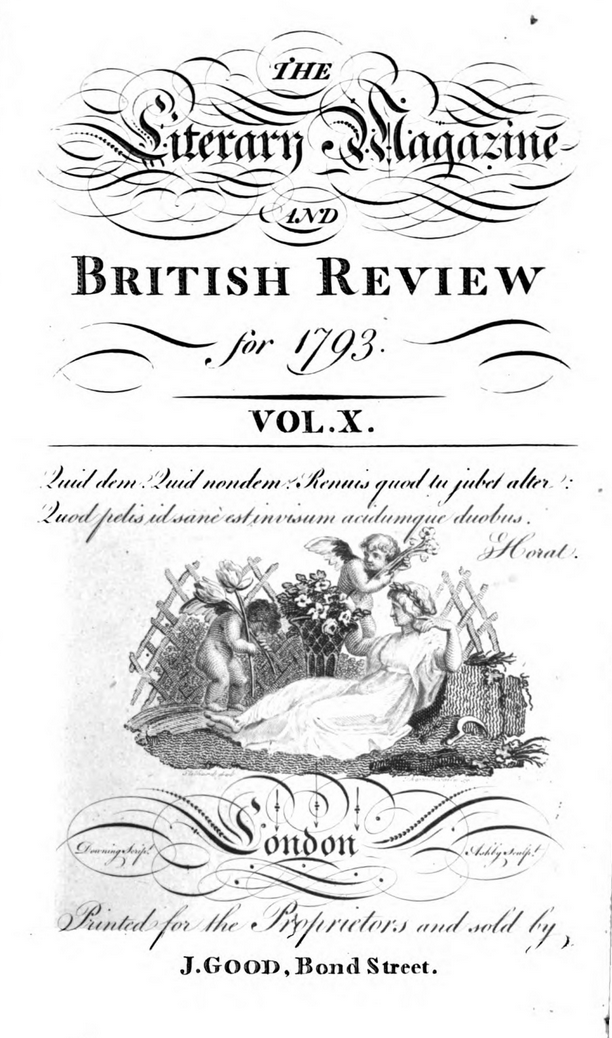
I happened to run across an article by Joseph Priestley  [Priestley, Joseph, LL.D, F.R.S., Of the Invention of Telescopes and Microscopes, with their First Improvements,The Literary and Biographical Magazine and British Review, vol.10 (June,1793): pp. 407-11.].

What I found so interesting with this article was that I could not find it listed in any of the standard bibliographies of his works; not even in the on-line Wikipedia bibliography on Joseph Priestley, which, importantly, is the most up to date (I have subsequently corrected that situation), nor in Robert Schofield book which is considered the authoritative biography on Priestley with an excellent bibliography.  It seems rather odd that a person with such a distinguished career and elaborate corpus of works as Priestley would have a publication missing from his bibliography for more than 210 years after his death, and 221 years after he wrote the article.  

I note, however, that while there was a section on the very subject of the article with the exact same title I found in his book: The History and Present State of Discoveries Relating to Vision, Light, and Colours, London: Printed for J. Johnson, 1772,pp.55-81, there is enough of a difference between the two works that this work should have been recorded as part of his bibliographical legacy. Further, it should be noted that there is a full 21 years difference between the publication dates of the book and the journal article. Finally, it is worth noting that it doesn't make any sense to have excluded it, based solely upon the fact that it appeared in such a prominent British publication with his authorship clearly identified.

One final note about the article, versus its content, is that while the title as stated above is what appears at the head of the magazine article, all subsequent pages of the article carry the banner "On the Invention of Telescopes and Microscopes" [emphasis added].

"The More Elaborate our Means of Communication, the Less we Communicate" J. Priestley


I have often seen the quote offered in the title of this post attributed to Joseph Priestley (1733-1804), the famous 18th-century British-American polymath who was the first to report the isolation of the gas Oxygen.  It has never sat right with me.  I have studied much about Joseph Priestley's life and it just didn't seem like there was much in the way of "elaborating" communication that had transpired before or during his lifetime other than the invention of movable type and the printing press in the 15th century.  I had often thought that a more probable candidate for the quote was J(ohn). B(oynton). Priestley (1894-1994), the famous 20th century British novelist and broadcaster.  He was certainly alive during a period of rapid change in communications technology; as a broadcaster was most certainly aware of communications skills; and, as a novelist he could certainly elaborate upon all this.

I have found two quotations, one is the title of this post and the other, almost identical, which, at first blush, looks identical, “The more elaborate our means of communication, the less we communicate”.  The second quote has an additional "we" as the third word.   Of the numerous sources I have found they attribute each of these quotations to either J. B. Priestley or Joseph Priestley (by the way, most are attributed to Joseph Priestley).  Interestingly, though, the quoters are not unanimous on which is attributable to each person. Not one quoter has actually cited the primary source (by primary source, I mean the actual publication by the respective author). I have found it hard to believe that these two people with almost identical names, each uttered almost identical quotes. I also find it hard to believe that I could not find the actual source of the quotation. 

I am proud to announce that, after a considerable search, I have now found the proper attribution and wording for the quote: “The more we elaborate our means of communication, the less we communicate.”  See Baden Eunson, Communicating in the 21st Century, in reference to Priestley’s Paradox.  The source reference for the quote is J.B. Priestley, Thoughts in the Wilderness,   Heinemann, 1957, p. 201. 


And, of course, the photo above is that of the author of the quote, J. B. Priestley.  May he rest in peace.


Thursday, August 13, 2015

Joseph Priestley on Public Television

Wed, Aug 19 at 8 pm, PBS
(Check your local PBS station for broadcast times)

            
Patrick Page as Joseph Priestley                      Patrick Page, Ava Deluca-Verley and Hugo Becker
 as Joseph Priestley, Marie Anne and Antoine Lavoisier

The Mystery of Matter: Search for the Elements is an exciting PBS series about one of the great adventures in the history of science: the long (and continuing) quest to understand what the world is made of—to identify, understand and organize the basic building blocks of matter.

Three hour-long episodes introduce viewers to some of history’s most extraordinary scientists: Joseph Priestley and Antoine Lavoisier, whose discovery of oxygen—and radical interpretation of it—led to the modern science of chemistry; Humphry Davy, who made electricity a powerful new tool in the search for elements; Dmitri Mendeleev, whose Periodic Table brought order to the growing gaggle of elements; Marie Curie, whose groundbreaking research on radioactivity cracked open a window into the atom; Harry Moseley, whose discovery of atomic number redefined the Periodic Table; and Glenn Seaborg, whose discovery of plutonium opened up a whole new realm of elements, still being explored today.

The Mystery of Matter shows us not only what these scientific explorers discovered but also how, using Broadway-caliber actors to reveal the creative process through the scientists’ own words, and conveying their landmark discoveries through re-enactments shot with working replicas of their original lab equipment. Knitting these strands together into a coherent, entertaining whole is host Michael Emerson, a two-time Emmy Award-winning actor.

Mystery of Matter:  Search for the Elements will be shown on PBS on Wednesday, August 19, 2015 from 8PM to 11PM. (3-1 hour shows airing back to back)


Thursday, January 22, 2015

Joseph Priestley, the Discoverer of Oxygen


Joseph Priestley, the Discoverer of Oxygen, 1912


Ernest Board, British (1877 - 1934)
Wellcome Library (Wellcome Trust) - London 
Painting - oil on canvas
Height: 61.5 cm (24.21 in.), Width: 91 cm (35.83 in.) 
I just found this painting by Ernest Board of Joseph Priestley. I had not run across it before and I wanted to share it with my readers. It is relatively modern painting of him. Ernest Board was a distinuished British painter of historical subjects and portraits; mural decorator. Born at Worcester, 1877 and was educated in Bristol. Studied art at the Royal College of Art, at the Royal Academy Schools, and later in the studio of Edwin Austin Abbey. Exhibited at the Royal Academy from 1902.  Died on 26th October 1934 aged 57.  Board was a member of the Royal Institute of Oil Painters (R.O.I.) and the Royal West of England Academy (R.W.A.).


Saturday, January 3, 2015

Thomas Holloway's Engraving of Joseph Priestley after William Artaud, 1795

Image provided with permission by Glenn Holgersen
This copper plate engraving was accomplished and published by Thomas Holloway in 1795 based upon a painting by William Artaud of 1794.  There are originals of this engraving at the National Portrait Gallery in London and the Smithsonian Institution in Washington. D.C.

Thomas Holloway (1748-1827) was a noted British engraver and portrait painter, not to be confused with Thomas Halliday (1771-1844) the British engraver who executed the death medal of Joseph Priestley in 1804, which is also in the National Portrait Gallery.  I have a post on the Thomas Halliday Medal elsewhere on this blog. Holloway studied engraving at the Royal Academy starting in 1773.  Initially, Holloway's main direction was line engraving.  His earliest published plates were small portraits for magazines, chiefly of nonconformist ministers, of which Priestley was a noted one, especially after his admission as a Fellow of the Royal Society.


Friday, October 3, 2014

Bas Relief Wood Carving of Joseph Priestley at the Northumberland PA Post Office


I just discovered this Bas Relief Wood Carving of Joseph Priestley at the Northumberland PA Post Office.  This carving by Dina Melicov was completed in 1941 as part of the WPA Federal Arts Project.

For other images of this carving see here or here.
/

Thursday, May 1, 2014

Joseph Priestley on experimental philosophy and empiricism

I am reposting here a very interesting article written by Peter Anstey, ARC Future Fellow, School of Philosophical and Historical Inquiry, University of Sydney, Australia that appeared on the University of Otago (New Zealand) Early Modern Experimental Philosophy website on April 28, 2014, with permission:

Joseph Priestley Rembrandt Peale [Public domain], via Wikimedia Commons
Joseph Priestley
Rembrandt Peale [Public domain], via Wikimedia Commons
Joseph Priestley is one of the most celebrated chemists of all time because of his role in the discovery of oxygen. So highly was he regarded that in 1922 the American Chemical Society named their most prestigious medal ‘The Priestley Medal’.
Priestley was born in 1733 and died in 1804. Thus, he flourished in the latter decades of the era of early modern experimental philosophy and a survey of his writings reveals that he embraced experimental philosophy. Indeed, by the late eighteenth century the experimental approach to natural philosophy was virtually without a rival in Britain. When analysing his writings on natural philosophy there is no sense that he believed that experimental philosophy needed to be defended or justified at all. To be sure, one finds the usual rhetoric of experimental philosophy, such as his comment in hisExperiments and Observations relating to various Branches of Natural Philosophy (London, 1779) that:
Speculation without experiment has always been the bane of true philosophy. (Preface, vii)
Yet when one turns to his Heads of Lectures on a Course of Experimental Philosophy (London, 1794) the term ‘Experimental Philosophy’ in the title is entirely unselfconscious. He opens Lecture I with a statement of the aim of the discipline:
The object of experimental philosophy is the knowledge of nature in general, or more strictly, that of the properties of natural substances, and of the changes of those properties in different circumstances. This knowledge can only be attained by experiment, orobservation. (p. 1)
He goes on to mention one of the ‘rules of philosophizing’ in this discipline: ‘to admit no more causes than are necessary to account for the effects’ (p. 3). Of course, this is Newton’s first rule of philosophizing from the second edition of the Principia and it is hardly surprising that Priestley goes on to claim that given the ‘power of gravity’ ‘we are authorized to reject the Cartesian Vortices’ (ibid.).
One might, therefore, regard Priestley’s writings as not having anything to teach us about early modern experimental philosophy. And yet there is at least one point that is worth highlighting, for, Priestley was the second person to use the term ‘empiricism’ in the title of a book in English. The first was Francis Guybon in his An Essay concerning the Growth of Empiricism; or the Encouragement of Quacks, London, 1712 which was an attack on medical quacks.
Then in 1775 Priestley published a book entitled Philosophical Empiricism: containing Remarks on a Charge of Plagiarism respecting Dr H––. He had been attacked by the Irish physician Bryan Higgins who had accused him of plagiarism and Priestley defended himself, attacking many claims in Higgins’ lectures and concluding:
These and suchlike long-exploded, and crude notions (so many of which I believe were never thrown together into the same compass since the age of Aristotle or Cartesius) are delivered in a manner and phrase so quaint, and a tone so solemn and authoritative, as gives me an idea that I cannot express otherwise than by the term Philosophical Empiricism. (p. 59)
What is interesting here is that ‘empiricism’ is used as a pejorative and is loosely associated with Descartes! This all predates the Kantian Rationalism and Empiricism distinction –– the RED. It is even tempting to claim that it shows the inappropriateness of foisting the term ‘empiricism’ in its Kantian sense on eighteenth century thinkers when it already had strong currency in eighteenth-century English with an entirely different meaning.

Sunday, December 30, 2012

Robert E Schofield, Joseph Priestley Scholar Died One year Ago Today


Robert E. Schofield   (June 1, 1923 - December 30, 2011) 
We shall miss Bob and the contributions he has made to the history of science and the fuller understanding of one of the greatest persons of the Enlightenment.


Robert E. Schofield of Montgomery Township, NJ, died one year ago today,  December 30, 2011.  Bob was born on June 1, 1923 in Milford, NE, and went on to live in Denver CO as a youth.  He attended Princeton University on a university scholarship and graduated with an A.B. in Physics in 1944. Immediately upon graduating he was drafted into the Army and entered the 9812 T.S.U. of the U.S. Army, Manhattan District Engineers. He served on inactive duty until 1945, was placed on active duty as a T/S in Oak Ridge TN, as a research assistant on the atomic bomb project, before his honorable discharge in 1946.
Bob returned to school to continue his graduate school in physics and was a teaching assistant at the University of Minnesota in Minneapolis from 1946 until he was granted his M.S. in Physics in 1948. From there he worked as a research Associate at Knolls Atomic Power Laboratory (a General Electric Company) in Schenectady, NY from 1948 to 1951. He was a graduate student and Teaching Fellow in the History of Science and Learning Department at Harvard University from 1951 until earning a Ph.D. in the History of Science in 1955. Concurrently, he was a Fulbright Fellow at University College, London from 1953 to 1954.
Over the next almost 40 years, Robert continued his teaching in many schools. He was a Department of History Assistant Professor and Associate Professor at University of Kansas, Lawrence, KS (1955-1959), Guggenheim Fellow (1959-1960), Associate Professor, History of Science, Case Institute of Technology in Cleveland, OH (1960-1964), Professor and Lynn Thorndike Professor, History of Science, Case Western Reserve University (1964-1972), Guggenheim Fellow (1967-1968), member of the Institute for Advanced Study, School of Historical Studies (1967-1968 and 1974-1975), Professor and Director of Graduate Studies, History of Technology and Science, Department of History, Iowa State University (1979 to 1993) and was Professor Emeritus from 1993 on.
One of his proudest accomplishments was in his teaching of undergraduate and graduate students. With Dr. Melvin Kranzberg, he created the History of Science and Technology Program for graduate and undergraduate studies at Case Institute of Technology (now Case Western Reserve University) in 1961. And, in 1980, with Dr. Richard Lowitt, he created the graduate Ph. D. program in History (Technology and Science and Agriculture) at Iowa State University. During his career as a graduate teacher, he was senior director for at least 12 students who obtained their doctorates in the History of Science and/or Technology, most of whom have continued as publishing and teaching scholars.
Mr. Schofield was a founder of the Midwest Junto for the History of Science (along with Duane H.D. Roller and Robert Siegfried), member of the History of Science Society, Society for the History of Technology, American Society for 18th Century Studies, Academie Internationale d’Historie des Sciences (corresponding), British Society for the History of Science and a Fellow at both the Royal Society of Arts and the American Physical Society.
While at the University of Kansas (1955-1959), Bob along with Dr. Robert Johannsen, started the History Department faculty colloquium, the “Hatchet Club” and with Richard Lowitt’s help started the Iowa State University History Department faculty colloquium, the “Vigilates”.
Author of some 35 papers in history journals such as Isis, Annals of Science, Chymia, Technology and Culture and the Journal of the History of Ideas, he also wrote articles and chapters in books, was author of the biography of Joseph Priestley for the New Dictionary of National Biography (England) and was editor of two books. Robert also wrote The Lunar Society of Birmingham in 1963 for which he won the Pfizer Prize for a History of Science Society book, Mechanism and Materialism (1970), Stephen Hales: Scientist and Philanthropist (with D.G.C. Allan), Man and the Frame of Nature (1989), The Enlightenment of Joseph Priestley 1733-1773 (1997) and The Enlightened Joseph Priestley 1774-1804 (2004), for which he won the Roy G. Neville Prize from the Chemical Heritage Foundation in 2006.
Mr. Schofield also has his nearly complete list of publications in the Schofield Festschrift: Beyond History of Science: Essays in Honor of Robert E. Schofield by Elizabeth Garber, editor (Bethlehem, PA: Lehigh University Press, 1990, pp. 311-312). He is listed in Who’s Who and Who’s Who in America.
Robert Schofield was predeceased by his wife, Mary Peale Smith whom he married June 20, 1959 and had previously obtained her B.A. from Smith College in 1945 and M.A. from Columbia University in 1956 and his parents Charles E. and Nora May Fullerton Schofield. Surviving are his son Charles Stockton Peale Schofield, Johns Hopkins University and a sister Maxey W. Garrett, Austin TX.

The preceding information was summarized from an Obituary at the Kimble Funeral Home in Princeton, NJ at the time of Bob's death.